

Supporting the development of new educational facilities
HEA was commissioned by New Line Learning Academy to provide archaeological consultancy services in support of proposals for a new hall and music block at New Line Learning Academy and Tiger Primary School in Maidstone, Kent. The development proposals comprised the construction of new buildings, associated support spaces, and external landscaping works. Given the site’s location within an area of recognised archaeological potential, archaeological considerations formed part of the planning process, with Condition 11 of the planning consent requiring a programme of archaeological investigation before development could commence.
Archaeological Desk-Based Assessment (ADBA) | Archaeological Consultancy | Archaeological Trial Trench Evaluation
Maidstone Borough Council
Establishing the Archaeological Potential
HEA initially undertook an Archaeological Desk-Based Assessment (ADBA) to establish potential archaeological constraints, and to inform the planning process.
The site was situated within several locally defined Archaeological Notification Areas , reflecting the wider area’s potential for archaeological remains dating from the Palaeolithic through to the Roman periods. Previous archaeological discoveries in the surrounding area have included evidence of Iron Age industrial activity and Roman occupation and settlement, partly focused around a nearby Roman road.
HEA reviewed the relevant archaeological and historical background alongside the results of previous investigations undertaken across the school site. These included earlier desk-based assessments, evaluation trial trenching, archaeological watching briefs (monitoring and recording exercises), and geophysical survey.
Previous investigations had generally identified limited archaeological evidence. A small number of undated features had been recorded, although subsequent assessment suggested these were associated with historic agricultural activity rather than significant archaeological remains.
Of particular relevance, previous investigations within and immediately adjacent to the proposed development area had identified little evidence of archaeological interest. Geophysical survey also indicated that parts of the development footprint had been subject to previous ground disturbance, likely associated with the construction of an earlier car park.
Drawing together the available evidence, HEA concluded that the potential for archaeological remains pre-dating the Post Medieval period was low, with significant archaeological impacts considered unlikely.
Managing the Archaeological Planning Condition
Planning permission (Ref. 25/502815/FULL) was subsequently granted by Maidstone Borough Council (the Local Planning Authority, or LPA), subject to a number of conditions. Condition 11 required a programme of archaeological field evaluation before development commenced, to be undertaken in accordance with a specification and written timetable which had first been approved by the Local Planning Authority. The condition also provided for further investigation, recording and reporting to be determined by the evaluation results, alongside an appropriate programme of post-excavation assessment and publication.
HEA managed the archaeological response to the condition, preparing a Written Scheme of Investigation (WSI) setting out the methodology for the evaluation, in order for it to be submitted for approval by the Local Planning Authority.
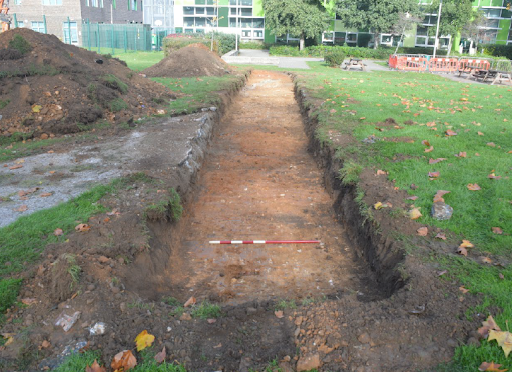
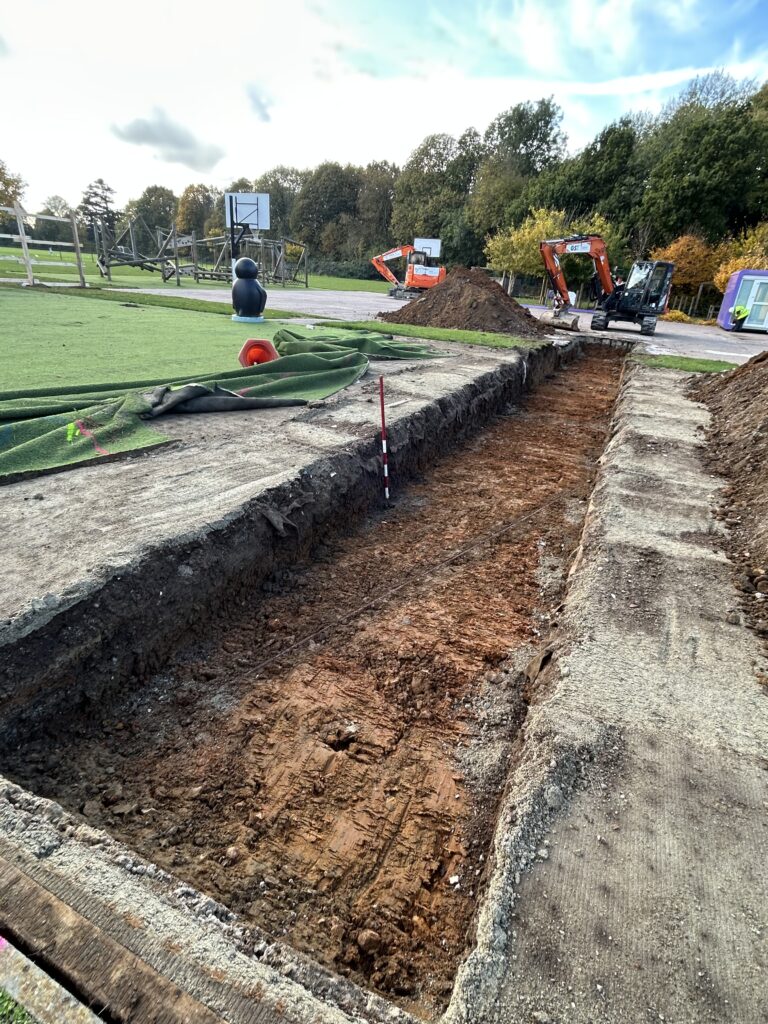
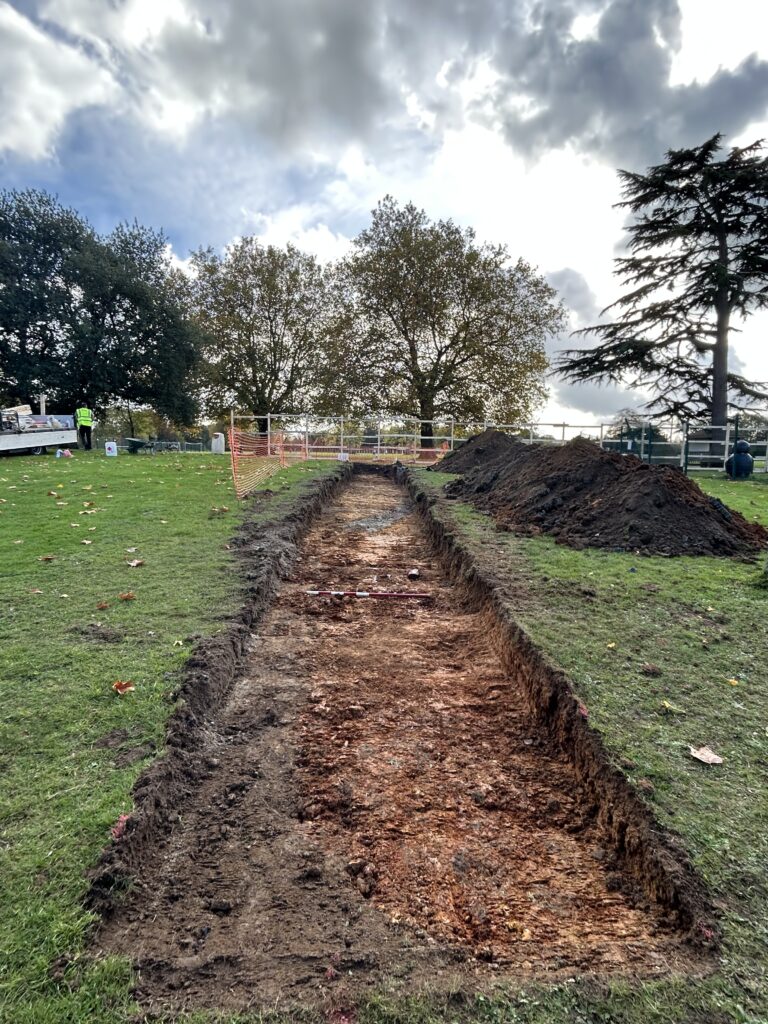
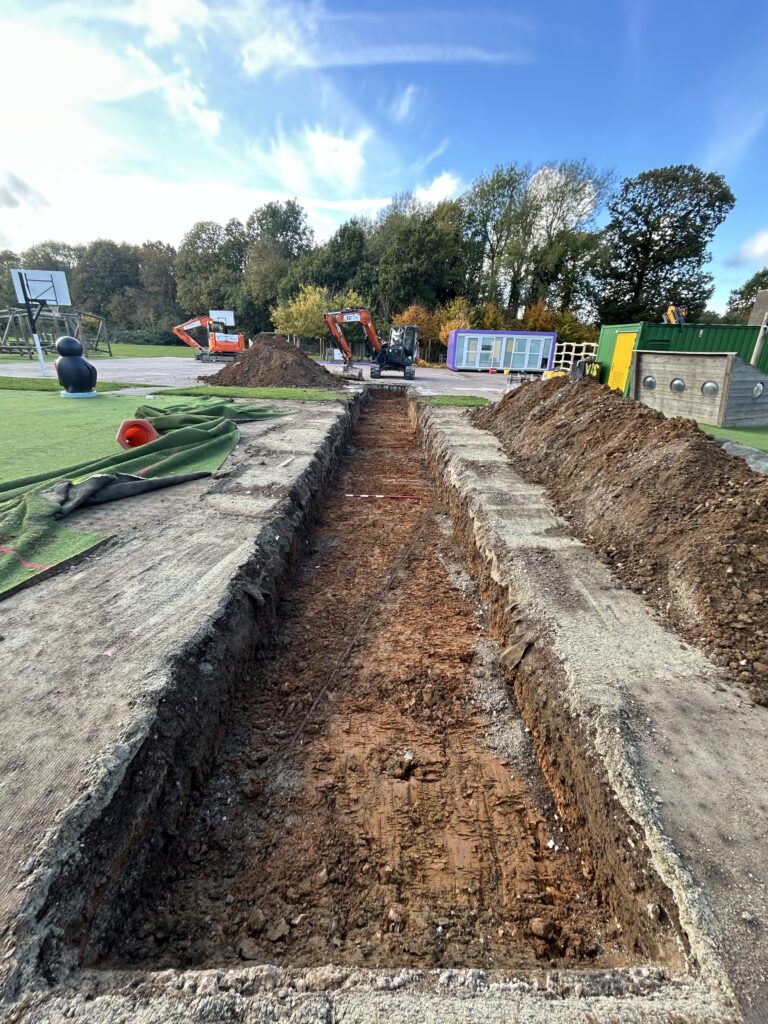
The evaluation work comprised two trenches, each approximately 18–21m in length. The investigation provided an opportunity to test the conclusions of the desk-based assessment and establish whether significant archaeological remains survived within the development footprint.
Evaluation Confirms Low Archaeological Potential
The evaluation exposed the underlying Hythe Formation bedrock geology, with modern linear features and deposits identified in both trenches. No significant archaeological features or deposits were encountered.
The results confirmed a very low potential for buried archaeological remains within the proposed development area.
Following submission of the evaluation report, the Senior Archaeological Officer at the Kent County Council Heritage Conservation Group, in their role as archaeological advisor to Maidstone Borough Council, confirmed that the report was acceptable, that no archaeological remains had been located, and that no further archaeological works were necessary. They consequently supported full discharge of the archaeological planning condition.
Securing Discharge
Subsequently, Maidstone Borough Council formally approved the details submitted in relation to the relevant planning conditions, completing the archaeological requirements under Condition 11.
The project demonstrated the value of an evidence-led and proportionate approach to archaeological risk. By combining a detailed understanding of the site’s archaeological background with targeted field evaluation, HEA was able to establish the archaeological constraints, manage the investigation required by the planning condition, and secure confirmation that no further archaeological work was necessary.
The outcome was the successful discharge of the archaeological planning condition, without the need for further archaeological investigation, allowing the school to progress its development proposals with confidence.
