

Introduction
HEA was appointed to provide archaeological consultancy services in support of proposals for the redevelopment of Gurnell Leisure Centre, Ealing, comprising demolition of the existing leisure centre and construction of a replacement facility alongside residential accommodation. The site was located within the Brent River Valley and Perivale Village Archaeological Priority Area, presenting potential for archaeological and palaeoenvironmental evidence associated with the River Brent, as well as remains relating to the area’s historic agricultural and institutional development.
Archaeological Consultancy | Archaeological Trial Trench Evaluation
Ealing Council
Our Approach
HEA initially prepared an Archaeological Desk-Based Assessment (ADBA) to establish the archaeological potential of the site, assess the likely impacts of development and inform the planning application.
The assessment identified potential for prehistoric environmental evidence, medieval and post-medieval agricultural remains, and remains associated with the site’s former sewage works and Isolation Hospital. It also recognised the extent of historic ground disturbance, particularly around the existing leisure centre.
Following consultation, the Greater London Archaeological Advisory Service (GLAAS), acting as the Council’s archaeological advisor, raised no objection to the proposals, subject to a staged programme of archaeological investigation secured through planning condition.
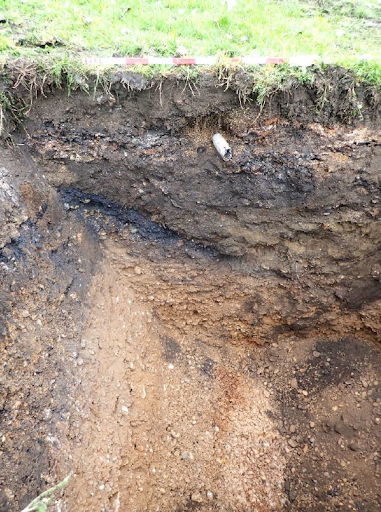
Taking a proactive approach, HEA commissioned a pre-emptive archaeological evaluation in October 2024, ahead of the formal post-consent requirements. The investigation comprised three trial trenches and two test pits, with the original trenching scope adapted to account for substantial modern deposits.
Results and Outcome
The evaluation established that much of the investigated area comprised an artificially raised terrace of demolition material, likely derived from the former sewage works. This had substantially altered the site’s original ground levels, with modern deposits extending to considerable depths.
Natural geological deposits were encountered in only one test pit, while the remaining investigations demonstrated the extent of modern made ground and historic disturbance.
The findings were reviewed with GLAAS, which confirmed that no further archaeological investigation was required. The subsequent planning permission included a compliance condition recognising the completed Stage 1 investigation and expressly confirming that a Stage 2 Written Scheme of Investigation was not necessary.
The HEA Difference
By undertaking archaeological investigation ahead of the formal planning condition, HEA helped establish the archaeological position at an early stage, providing clarity for the development team and avoiding unnecessary further archaeological work.
Our proactive management of the archaeological process enabled the client to address potential planning requirements early, demonstrate that appropriate archaeological consideration had been given to the site, and progress the redevelopment proposals without further archaeological investigation.
